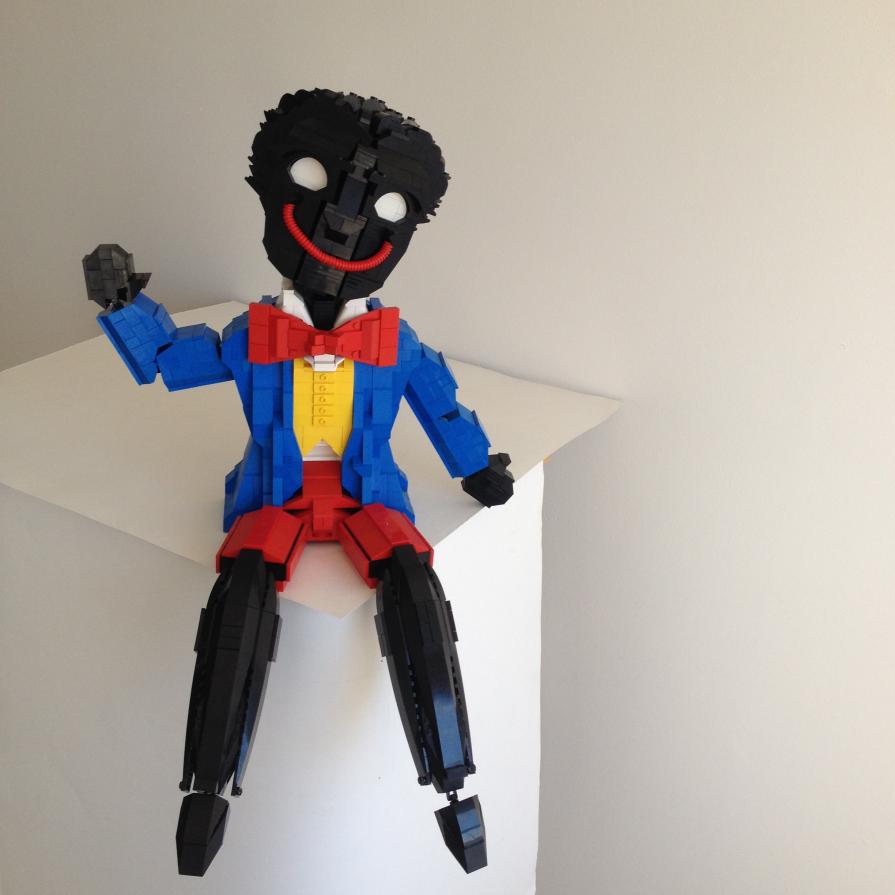
Smiling Doll
The Introspection of Smiling Doll
Smiling Doll was the happiest doll in the world and everyone knew it.
Just as they knew that Baby Doll was the cutest, Barbara Doll the prettiest, Army Doll the bravest, and Teddy Doll the softest. Yes, anyone that knew Smiling Doll knew that on any given day he was never without his trademark kinky hair, big white eyes, and broad red smile.
After all, that's how they all knew he was so happy.
“I just love my Smiling Doll!” said the nameless girl he belonged to as she cradled him in her arms, “he's just so happy and silly and ugly and nice! Why are you so happy my charming little pet?”
Of course, Smiling Doll could not answer her anymore than an eggplant could, but he could think well enough for himself, and now he thought: why was he so happy? Was it because he was always left on the floor while all the other dolls were put on the shelf? Or was it because the other dolls never invited him to play cards at Barbara's house? Maybe it was because he looked so different from all the other dolls? Was it his clothes? His hair? In the end, Smiling Doll could not figure out why the doll-maker made him look so happy, and for the first time he began to wonder if he really was.
“I know!” said the nameless girl interrupting his solemnity, “you must be happy because I want you to be happy, and that's all that matters!” Then she skittered off elsewhere leaving Smiling Doll slumped on the floor, alone with his thoughts.
Ekow Nimako
Smiling Doll is representative of the controversial golliwog, a blackface minstrel character that became popularized amongst whites primarily in North America, Australia, and the UK during the 19th and early 20th century as a children's doll and storybook character. Infamous in various forms the world over, this unsubtly racist character continues to be a point of contention for black and indigenous peoples, while remaining endeared in the memories of whites across the globe. The name Smiling Doll itself avoids no irony considering the fact that most golliwogs are depicted as smiling and ever-happy, while the state of affairs for black people during the creation of this character, and to this day, remains plagued with injustice, violence, mockery, and cultural appropriation. Additionally, the significance of using LEGO® to create such a thing cannot be overlooked, considering that the playful, benign plastic toy also represents a childhood cultural phenomenon that is nonetheless subverted when used to build something as taboo and provocative as the golliwog.
Smiling Doll was the happiest doll in the world and everyone knew it.
Just as they knew that Baby Doll was the cutest, Barbara Doll the prettiest, Army Doll the bravest, and Teddy Doll the softest. Yes, anyone that knew Smiling Doll knew that on any given day he was never without his trademark kinky hair, big white eyes, and broad red smile.
After all, that's how they all knew he was so happy.
“I just love my Smiling Doll!” said the nameless girl he belonged to as she cradled him in her arms, “he's just so happy and silly and ugly and nice! Why are you so happy my charming little pet?”
Of course, Smiling Doll could not answer her anymore than an eggplant could, but he could think well enough for himself, and now he thought: why was he so happy? Was it because he was always left on the floor while all the other dolls were put on the shelf? Or was it because the other dolls never invited him to play cards at Barbara's house? Maybe it was because he looked so different from all the other dolls? Was it his clothes? His hair? In the end, Smiling Doll could not figure out why the doll-maker made him look so happy, and for the first time he began to wonder if he really was.
“I know!” said the nameless girl interrupting his solemnity, “you must be happy because I want you to be happy, and that's all that matters!” Then she skittered off elsewhere leaving Smiling Doll slumped on the floor, alone with his thoughts.
Ekow Nimako
Smiling Doll is representative of the controversial golliwog, a blackface minstrel character that became popularized amongst whites primarily in North America, Australia, and the UK during the 19th and early 20th century as a children's doll and storybook character. Infamous in various forms the world over, this unsubtly racist character continues to be a point of contention for black and indigenous peoples, while remaining endeared in the memories of whites across the globe. The name Smiling Doll itself avoids no irony considering the fact that most golliwogs are depicted as smiling and ever-happy, while the state of affairs for black people during the creation of this character, and to this day, remains plagued with injustice, violence, mockery, and cultural appropriation. Additionally, the significance of using LEGO® to create such a thing cannot be overlooked, considering that the playful, benign plastic toy also represents a childhood cultural phenomenon that is nonetheless subverted when used to build something as taboo and provocative as the golliwog.





Commenti 0
Inserisci commento