
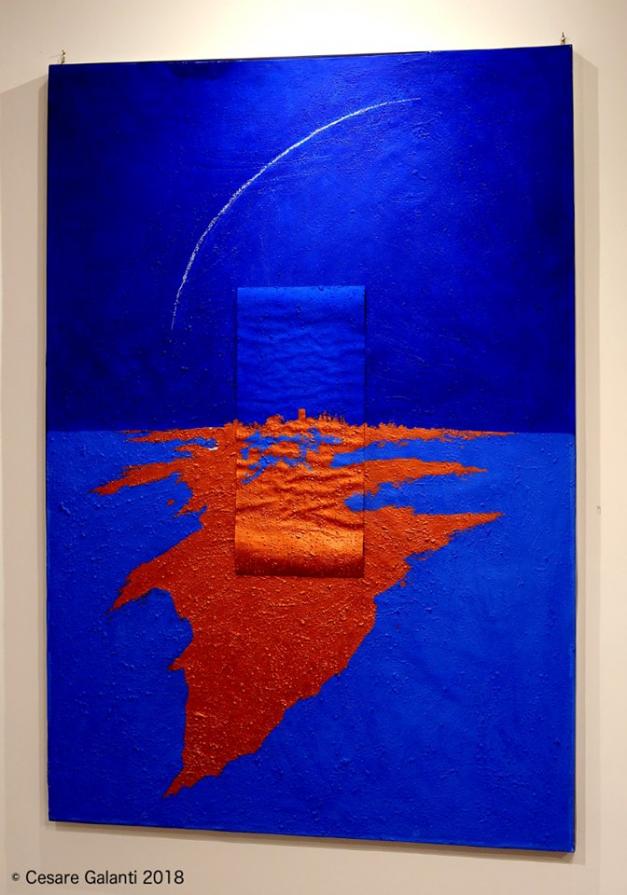
Ninfa, paesaggi con figure assenti
paesaggio di ninfa
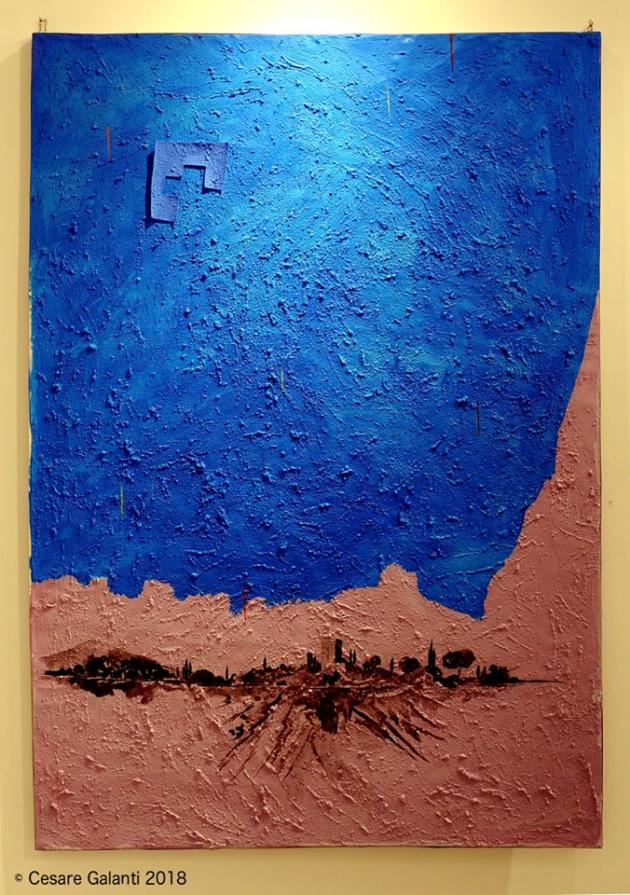
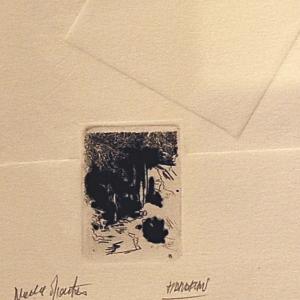
case a monte del fiume
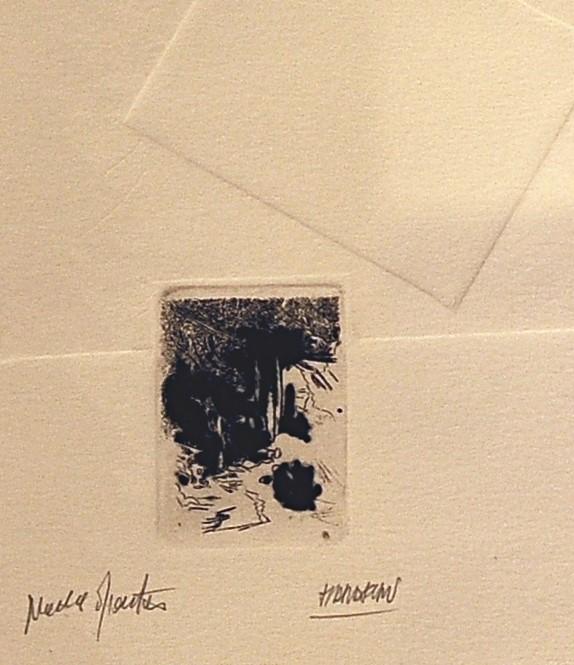
Ninfa, paesaggi con figure assenti
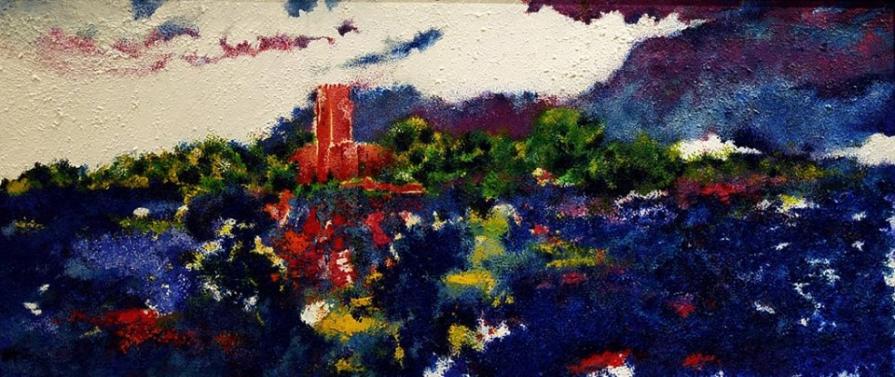
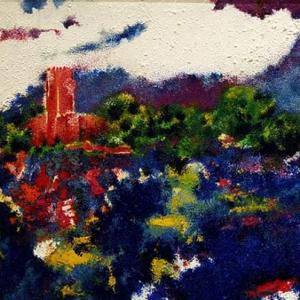
Ninfa, paesaggi con gigure assenti
The line engraving implemented by Patrizio Marafini does not depend so much on (as it has already been noticed) the fact that the stroke adapts to the word.
The ut pictura poesis is truly and just valid for poets, artists of the verbal text.
Instead, the artist of lines, colours and ensuing forms scrutinizes the texts in the same way as he explores 'nature' with his mind's eye and that of his heart, even before that of his human physiology.
In much the same way, Giovanni Pascoli, in poetry had already done this, as in 'Myricae', and, above all, in that magical composition which is "Il bosco" ("the bush"), where, next to mushrooms, trees and aura, "nymphs" and "fauns" appear and disappear:
O vecchio bosco pieno d’albatrelli,
che sai di funghi e spiri la malìa,
cui tutto io già scampanellare udia
di cicale invisibili e d’uccelli:
in te vivono i fauni ridarelli
ch’hanno le sussurranti aure in balìa;
vive la ninfa, e i passi lenti spia,
bionda tra le interrotte ombre i capelli.
Di ninfe albeggia in mezzo alla ramaglia
or sì or no, che se il desio le vinca,
l’occhio alcuna ne attinge, e il sol le bacia.
Dileguano; e pur viva è la boscaglia,
viva sempre ne’ fior della pervinca
e nelle grandi ciocche dell’acacia.
Patrizio Marafini interprets Ninfa, a recurrent construction of 'nature' by covering it with unaccustomed meanings. So, in this way, he covers human construction in an incisive style tracing it back to the psychological scenery (as, for example, in the beautiful image of the "Palazzo del Governo". ("The Government Hall").
The final effect is the addition of sensation which the picture gives together and in competition with the poesis . A lot is owed in this transferring of images amongst contiguous, scholarly codes to the technical means wisely manipulated by the Artist.
The engraved lines convey the sudden centrifugal approach and extend the forms, in such a way that the original, naturalistic panel becomes distorted in order to be in harmony with the artist’s excited eyes.
Marafini, in his own way, considers himself to be the true heir of pictorial impressionism, but tends to inevitably overcome the ideological absoluteness of the 19th century manner, and is aware of the genetic formal and informal change of 20th century art.
Between engraving and painting, in Marafini, there is no solution of continuity.
In the same way, between poesis et pictura. Therefore, one can consider complementary to the visual art of Patrizio Marafini that of his fellow poet,
Leone D'Ambrosio, the common care of the poetic and verbal visions of
Philippe Jaccottet, another Pascoli reader of Ninfa, in which each artist discovers
the immortality of nature, history, culture and art.
Rino Caputo
Literary and art critic.
The ut pictura poesis is truly and just valid for poets, artists of the verbal text.
Instead, the artist of lines, colours and ensuing forms scrutinizes the texts in the same way as he explores 'nature' with his mind's eye and that of his heart, even before that of his human physiology.
In much the same way, Giovanni Pascoli, in poetry had already done this, as in 'Myricae', and, above all, in that magical composition which is "Il bosco" ("the bush"), where, next to mushrooms, trees and aura, "nymphs" and "fauns" appear and disappear:
O vecchio bosco pieno d’albatrelli,
che sai di funghi e spiri la malìa,
cui tutto io già scampanellare udia
di cicale invisibili e d’uccelli:
in te vivono i fauni ridarelli
ch’hanno le sussurranti aure in balìa;
vive la ninfa, e i passi lenti spia,
bionda tra le interrotte ombre i capelli.
Di ninfe albeggia in mezzo alla ramaglia
or sì or no, che se il desio le vinca,
l’occhio alcuna ne attinge, e il sol le bacia.
Dileguano; e pur viva è la boscaglia,
viva sempre ne’ fior della pervinca
e nelle grandi ciocche dell’acacia.
Patrizio Marafini interprets Ninfa, a recurrent construction of 'nature' by covering it with unaccustomed meanings. So, in this way, he covers human construction in an incisive style tracing it back to the psychological scenery (as, for example, in the beautiful image of the "Palazzo del Governo". ("The Government Hall").
The final effect is the addition of sensation which the picture gives together and in competition with the poesis . A lot is owed in this transferring of images amongst contiguous, scholarly codes to the technical means wisely manipulated by the Artist.
The engraved lines convey the sudden centrifugal approach and extend the forms, in such a way that the original, naturalistic panel becomes distorted in order to be in harmony with the artist’s excited eyes.
Marafini, in his own way, considers himself to be the true heir of pictorial impressionism, but tends to inevitably overcome the ideological absoluteness of the 19th century manner, and is aware of the genetic formal and informal change of 20th century art.
Between engraving and painting, in Marafini, there is no solution of continuity.
In the same way, between poesis et pictura. Therefore, one can consider complementary to the visual art of Patrizio Marafini that of his fellow poet,
Leone D'Ambrosio, the common care of the poetic and verbal visions of
Philippe Jaccottet, another Pascoli reader of Ninfa, in which each artist discovers
the immortality of nature, history, culture and art.
Rino Caputo
Literary and art critic.





Comments 0
Say something